Areas Related to Circles
Introduction to Areas Related to Circles
The chapter Areas Related to Circles is an important part of Class 10 Mathematics. In earlier classes, students learned basic concepts about circles such as radius, diameter, circumference, and area. In this chapter, students learn how to calculate the area and perimeter of different parts of a circle, especially sectors and segments.
This chapter is practical and formula-based, which means if students understand the formulas and practice numerical questions regularly, they can score good marks easily.
Circles are used in many everyday objects such as:
• Wheels
• Clocks
• Coins
• Rings
• Plates
• Circular Parks
Understanding areas related to circles helps in solving real-life measurement problems.
This chapter mainly covers:
• Circumference of a Circle
• Area of a Circle
• Sector of a Circle
• Arc Length
• Area of Sector
• Segment of a Circle
• Area of Segment
Most board exam questions in this chapter are numerical and formula-based.
What is a Circle?
A circle is a closed figure in which every point on the boundary is at an equal distance from a fixed point called the centre.
The fixed distance from the centre to the boundary is called the radius.
Important Terms of Circle
Before understanding formulas, students should know some basic terms.
Centre
The fixed point inside the circle.
Example: O
Radius
The line joining the centre to any point on the circle.
Represented as: r
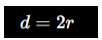
Diameter
A line passing through the centre and joining two points of the circle.
Relationship:
Circumference
The boundary or outer edge of the circle.
Chord
A line joining two points on the circle.
Arc
A portion of the circumference of a circle.
Sector
A region enclosed by two radii and one arc.
Segment
The area between a chord and its corresponding arc.
These concepts are very important for solving problems.
Circumference of a Circle
The circumference is the total distance around a circle.
Formula:
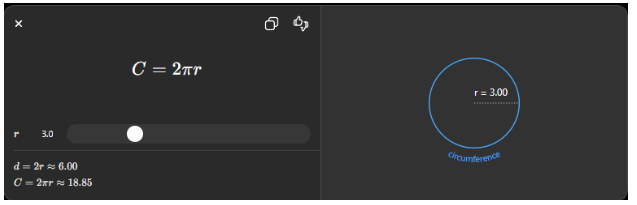
Where:
C = Circumference
r = Radius
π = 22/7 or 3.14
Example
If:
Radius = 7 cm
Then:
Circumference = 2 × 22/7 × 7 = 44 cm
Therefore, the circumference is 44 cm.
Area of a Circle
The area of a circle means the total region enclosed inside the boundary.
Formula:
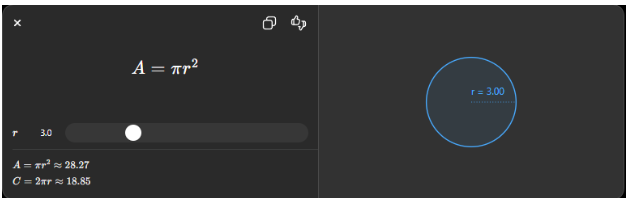
Where:
A = Area
r = Radius
Example
Radius = 7 cm
Area = 22/7 × 7 × 7 = 154 cm²
Thus, the area of the circle becomes 154 cm².
Students should remember this formula carefully.
What is a Sector of a Circle?
A sector is a portion of a circle enclosed between two radii and one arc.
There are two types of sectors.
Minor Sector
The smaller region of the circle.
Major Sector
The larger region of the circle.
Sectors are mainly identified using the angle formed at the centre.
Length of an Arc
The curved part of a circle is called an arc.
Formula for arc length:

Where:
θ = Angle at the centre
Example
Suppose:
Radius = 14 cm
Angle = 90°
Arc Length = (90/360) × 2 × 22/7 × 14 = 22 cm
Therefore, the arc length becomes 22 cm.
Area of Sector
The area of a sector depends on the angle at the centre.
Formula:

Where:
θ = Central Angle
r = Radius
Example
Suppose:
Radius = 7 cm
Angle = 90°
Area = (90/360) × 22/7 × 7² = 38.5 cm²
Hence, the area of the sector is 38.5 cm².
This formula is frequently used in examinations.
What is a Segment of a Circle?
A segment is the region between a chord and its corresponding arc.
There are two types.
Minor Segment
The smaller part of the circle.
Major Segment
The larger part of the circle.
Segment questions are slightly difficult because students must subtract areas.
Area of Segment
Formula:
Area of Segment = Area of Sector − Area of Triangle
This means:

Example
Suppose:
Sector Area = 80 cm²
Triangle Area = 30 cm²
Then:
Segment Area = 80 − 30 = 50 cm²
Thus, the segment area becomes 50 cm².
Students should practice this concept carefully.
Combination Problems
In board exams, questions often involve combined shapes.
Examples:
• Semi-circle + Rectangle
• Circle − Square
• Sector + Triangle
Students should solve these by dividing the figure into smaller parts.
Semi-Circle Formula
Area of Semicircle:

Circumference of Semicircle:

Quarter Circle Formula
Area:

These formulas are important.
Applications of Areas Related to Circles
Construction
Engineers calculate circular land areas.
Architecture
Circular buildings and parks require area calculations.
Sports
Circular grounds use circle formulas.
Manufacturing
Machines often contain circular parts.
Transportation
Wheel dimensions involve circumference calculations.
This proves circles are useful in practical life.
Common Mistakes Students Make
1. Wrong Formula Usage
Students often confuse area and circumference formulas.
Remember:
Circumference → Around the Circle
Area → Inside the Circle
2. Forgetting Units
Always write:
• cm² for Area
• cm for Length
3. Calculation Mistakes
Simplify π carefully.
4. Incorrect Angle in Sector Formula
Use the correct central angle.
5. Segment Formula Errors
Remember:
Segment = Sector − Triangle
Not addition.
Tips to Score Good Marks
• Learn formulas properly.
• Practice numerical questions daily.
• Understand sector and segment clearly.
• Solve NCERT examples multiple times.
• Revise π calculations regularly.
This chapter is highly scoring with practice.
Conclusion
The chapter Areas Related to Circles helps students understand how to calculate the area and perimeter of different parts of a circle. Concepts such as circumference, area of a circle, sector, arc length, and segment area are extremely important for board examinations.
Although the formulas may initially seem confusing, regular practice makes the chapter easy and scoring. Students should focus on understanding formulas instead of memorizing them blindly. With sufficient practice, this chapter becomes one of the highest-scoring topics in Class 10 Mathematics.