Some Applications of Trigonometry
Introduction to Some Applications of Trigonometry
The chapter Some Applications of Trigonometry is a continuation of the Introduction to Trigonometry chapter. In the previous chapter, students learned about trigonometric ratios such as sin, cos, and tan. In this chapter, we learn how to apply those concepts in real-life situations.
This chapter mainly helps students calculate the height and distance of objects that cannot be measured directly.
For example:
• Finding the height of a building
• Measuring the height of a tower
• Finding the distance between two places
• Measuring the height of mountains and trees
In simple words, trigonometry helps us solve practical problems related to measurements.
This chapter is very important for board exams because numerical questions are frequently asked.
What Are Applications of Trigonometry?
Applications of Trigonometry refer to the practical use of trigonometric ratios in solving real-world problems.
Instead of directly measuring heights or distances, we use:
• Angles
• Distances
• Trigonometric Ratios
to calculate unknown values.
For example, if you know the angle from the ground to the top of a building and the distance from the building, you can calculate its height without climbing it.
This makes trigonometry extremely useful in engineering, surveying, architecture, and navigation.
Important Terms in This Chapter
Before understanding applications, students should know some important terms.
1. Line of Sight
The imaginary line joining the observer's eye to the object is called the line of sight.
For example, if a person looks at the top of a building, the line joining the eyes to the top is called the line of sight.
2. Angle of Elevation
When the object is above the observer's eye level, the angle formed is called the angle of elevation.
Examples include looking upward at:
• A building
• A mountain
• A tower
The angle formed with the ground is called the angle of elevation.
3. Angle of Depression
When the object is below the observer's eye level, the angle formed is called the angle of depression.
Examples include looking downward from:
• A tower
• A bridge
• A building
The angle formed is called the angle of depression.
These concepts are very important because most questions in this chapter are based on them.
Trigonometric Ratios Used in Applications
In this chapter, mainly three ratios are used.
Sine Ratio
sin θ = Perpendicular / Hypotenuse
Cosine Ratio
cos θ = Base / Hypotenuse
Tangent Ratio
tan θ = Perpendicular / Base
Among these, tan θ is used most frequently in board examination questions.
This is because height and distance problems mostly involve:
• Height → Perpendicular
• Distance → Base
Understanding Height and Distance Problems
Most questions in this chapter involve:
• A right triangle
• A known angle
• A known side
You must find the unknown side.
Example Situation
Suppose a person stands 20 meters away from a building and observes the top of the building at an angle of 45°.
Find the height of the building.
Here:
Distance from building = 20 m
Angle = 45°
Height = ?
Using tangent ratio:
tan θ = Height / Distance
Substituting values:
tan 45° = Height / 20
We know:
tan 45° = 1
Therefore:
Height = 20 m
Hence, the height of the building is 20 meters.
Solving Questions Using Trigonometry
Step 1: Draw a Diagram
Always draw a rough right triangle. This helps understand the question better.
Step 2: Identify Given Information
Check:
• Angle given
• Height given
• Distance given
Step 3: Choose Correct Ratio
Use:
• Sin → if hypotenuse involved
• Cos → if base involved
• Tan → for height and distance
Step 4: Apply Formula
Substitute values carefully.
Step 5: Solve
Calculate the answer accurately.
Following these steps makes problem-solving easier.
Standard Trigonometric Values
Students should remember standard values because they are frequently used in numerical questions.
Sin Values

Cos Values

Tan Values

Learning these values properly makes calculations faster and easier.
Real-Life Applications of Trigonometry
Construction
Builders use trigonometry to calculate heights and distances while designing buildings.
Surveying
Land surveyors measure land using trigonometric methods.
Astronomy
Scientists use trigonometry to measure distances between planets and stars.
Aviation
Pilots use trigonometry for navigation and flight path calculations.
Navigation
Ships and GPS systems use trigonometric calculations for positioning and route planning.
Military Applications
Defense systems use trigonometry to calculate target positions and distances.
This chapter has many practical uses beyond the classroom.
Example Problem
A ladder leans against a wall.
Length of ladder = 10 m
Distance from wall = 6 m
Find the height reached by the ladder.
Using the Pythagoras Theorem:
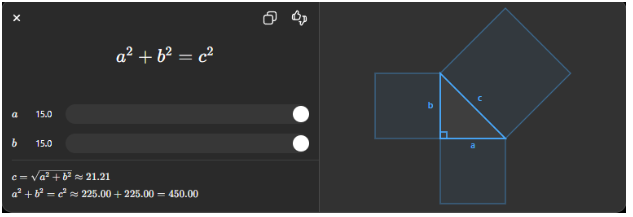
Height² + 6² = 10²
Height² + 36 = 100
Height² = 64
Height = 8 m
Therefore, the ladder reaches 8 meters high.
This type of question is common in examinations.
Common Mistakes Students Make
1. Choosing the Wrong Ratio
Students often confuse Sin, Cos, and Tan. Choose the ratio according to the known values.
2. Forgetting Standard Values
Memorize the values of 30°, 45°, and 60° properly.
3. Drawing the Wrong Diagram
Always draw a rough figure before solving any question.
4. Calculation Errors
Square roots and simplifications should be done carefully.
5. Ignoring Units
Always write answers in appropriate units such as meters, centimeters, or kilometers.
Tips to Score Good Marks
Learn standard trigonometric values properly.
Practice diagram-based questions regularly.
Understand angle of elevation and angle of depression thoroughly.
Solve NCERT exercises multiple times.
Practice numerical questions daily.
This chapter becomes easy with enough practice.
Conclusion
The chapter Some Applications of Trigonometry teaches students how to use trigonometric concepts in real-life situations. Instead of measuring objects directly, we can calculate heights and distances using angles and trigonometric ratios.
Key concepts such as line of sight, angle of elevation, angle of depression, and trigonometric ratios are very important for board examinations.
Although students may initially find word problems difficult, regular practice makes this chapter simple and scoring. Once you understand how to draw diagrams and apply formulas, solving trigonometry questions becomes much easier.