Constructions
Introduction to Constructions
The chapter Constructions is an important geometry chapter in Class 10 Mathematics. In previous classes, students learned how to draw simple geometrical figures using a ruler, compass, and protractor. However, in Class 10, the focus is mainly on constructing triangles under specific conditions.
Construction means drawing geometrical figures accurately using mathematical rules and instruments.
This chapter helps students understand how to create exact shapes rather than rough sketches. It improves accuracy, logical thinking, and understanding of geometry.
In board exams, construction questions are important because they usually carry step marks. Even if the final answer is incorrect, proper construction steps can help students score marks.
This chapter mainly focuses on:
• Division of a line segment
• Construction of similar triangles
• Construction of tangents to a circle
Students should practice drawing neatly because diagrams matter a lot in this chapter.
What is Geometrical Construction?
Geometrical construction means drawing figures using only:
• A ruler (without measurement markings)
• Compass
• Pencil
The goal is to create accurate figures according to given mathematical conditions.
For example:
• Dividing a line in a given ratio
• Constructing a triangle similar to another triangle
• Drawing tangents to a circle
Constructions require careful observation and step-by-step drawing.
Tools Used in Construction
Ruler
A ruler is used to draw straight lines.
Compass
A compass helps draw arcs and circles.
Pencil
A sharp pencil is used for neat construction.
Eraser
Used to remove unwanted lines carefully.
Good instruments help make diagrams cleaner and more accurate.
Division of a Line Segment
One important concept in this chapter is dividing a line segment into a given ratio.
Suppose a line segment AB is given.
We need to divide it in the ratio:
m : n
This means the line should be split into two parts according to the given proportion.
Construction Steps
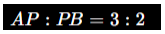
Suppose we want to divide line AB in the ratio 3 : 2.
Step 1
Draw line segment AB.
Step 2
Draw an acute ray AX from point A.
Step 3
Mark equal points on ray AX.
Since the ratio is 3 : 2:
Total = 3 + 2 = 5
Mark five equal points.
Step 4
Join the last point to point B.
Step 5
Draw a parallel line through the required division point.
The line cuts AB at the required point P.
Thus:
This method is commonly asked in examinations.
Construction of Similar Triangles
Another important topic is constructing triangles similar to a given triangle.
Two triangles are called similar if:
• Corresponding angles are equal
• Corresponding sides are proportional
Cases of Similar Triangle Construction
There are mainly two cases.
Case 1: Constructing a Similar Triangle Smaller Than the Given Triangle
Suppose a triangle ABC is given.
We need to construct a triangle similar to it with scale factor:
2/3
This means the new triangle will be smaller.
Steps
1. Draw triangle ABC.
2. Draw a ray from vertex A.
3. Mark equal points on the ray.
4. Join the last point to B.
5. Draw a parallel line from the required point.
6. Extend the line to meet AC.
The new triangle formed becomes similar to the original triangle.
Case 2: Constructing a Similar Triangle Larger Than the Given Triangle
Suppose the scale factor is:
5/3
The new triangle becomes larger.
The process remains almost the same, but more points are marked outside.
Students should practice both cases carefully.
Construction of Tangents to a Circle
One of the easiest topics in this chapter is drawing tangents to a circle.
Case 1: Tangent at a Point on the Circle
Suppose point P lies on the circle.
We need to draw a tangent.
Steps
1. Join center O to point P.
2. Draw a line perpendicular to radius OP at P.
Since:

The perpendicular line becomes the tangent.
Case 2: Tangents from an External Point
Suppose point P lies outside the circle.
We need to draw tangents.
Steps
1. Join center O to external point P.
2. Find the midpoint of OP.
3. Draw a circle using the midpoint as center.
4. The new circle intersects the original circle at points A and B.
5. Join PA and PB.
These become tangents.
Also:
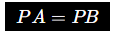
This is based on the tangent theorem.
Importance of Construction Chapter
Helps Improve Accuracy
Construction improves precision and careful observation.
High Scoring Chapter
Students can score full marks through neat diagrams.
Builds Geometry Skills
Understanding construction helps in future mathematics.
Practical Usage
Construction methods are useful in:
• Architecture
• Engineering
• Designing
• Surveying
Practical Applications of Constructions
Architecture
Architects use construction principles while designing buildings.
Engineering
Mechanical engineers use exact measurements.
Map Designing
Surveyors divide land accurately.
Designing Objects
Circular and symmetrical objects are designed using geometric methods.
This proves constructions are not limited to textbooks.
Common Mistakes Students Make
1. Untidy Diagrams
Messy diagrams can reduce marks.
Always draw neatly.
2. Wrong Ratio Division
Students often divide an incorrect number of points.
Check the ratio carefully.
Example:
3 : 2 = 5 total points
3. Incorrect Compass Use
Compass measurements should stay fixed.
4. Forgetting Parallel Lines
Parallel lines are essential in triangle construction.
5. Skipping Construction Steps
Board exams often give marks for steps.
Write every step properly.
Tips to Score Good Marks in Constructions
Practice diagrams regularly.
Keep compass handling accurate.
Draw clean and clear figures.
Memorize construction steps.
Practice NCERT examples multiple times.
Constructions become easy with practice.
Important Exam Points
Students should remember:
• Always use sharp pencils
• Label diagrams properly
• Mention steps in order
• Do not erase too much
• Practice tangent construction carefully
Neatness plays an important role in this chapter.
Conclusion
The chapter Constructions teaches students how to draw accurate geometrical figures using mathematical methods. Important concepts such as line division, similar triangle construction, and tangent construction are useful for board exams and practical applications.
Although some students initially find compass work difficult, regular practice makes this chapter simple and scoring. Since step marking is involved, students can secure good marks even with minor mistakes.